
Maybe you never knew it went away. Fortunately, Amy Goldman tells the story nicely in The Compleat Squash, or I would have been totally mystified by a crookneck’s unexpected return to my garden. As squash seed savers know, there are basically three species of common table squash made up of hundreds of varieties. Since different species of a plant do not interbreed, it is common practice for seed savers to plant one variety of the three separate species and not have to worry as much about cross-pollination of the varieties that you plant throwing off seed to “gourdian squashkins,” the name I give to those inedible crosses common with the pepos, when a Patty-pan and a Zucchini produce offspring. There are many choices of varieties for the common maxima winter squashes. You can choose a Buttercup, Hubbard, Sweetmeat, or the warty Marina de Chioggia, and if there is only one maxima in your garden, then the seed will come true (barring wayward bees checking out your neighbor’s maximas). Same goes for the pepo squashes. But there are so many tasty pepos most gardeners can’t keep themselves to just one variety. I usually grow Zucchini. Yellow Crookneck summer squash, Delicata, and maybe Spaghetti squash. If you want seed you are stuck with hand pollinating. But the third species, moschata, has just one common variety for most gardeners, the tasty Butternut squash.
For almost no effort, then, you can save Butternut seed year after year and expect consistent results. As I’ve mentioned before, squash seed saving is particularly satisfying because you get to taste the squash before you have to make the decision whether to save or compost the seed. If the squash is tasty and sweet, a nice size and good texture, I save the seed. This I have done, a good many years now, and have indeed had consistent results – until a couple of years ago. That year one of my Butternut plants produced a couple of squashes with relatively long straight necks. They tasted good, and were a bit larger than the average Butternut squash, so I saved the seed. Then last year came the surprise, when from my Butternut planting came two large crookneck squashes.
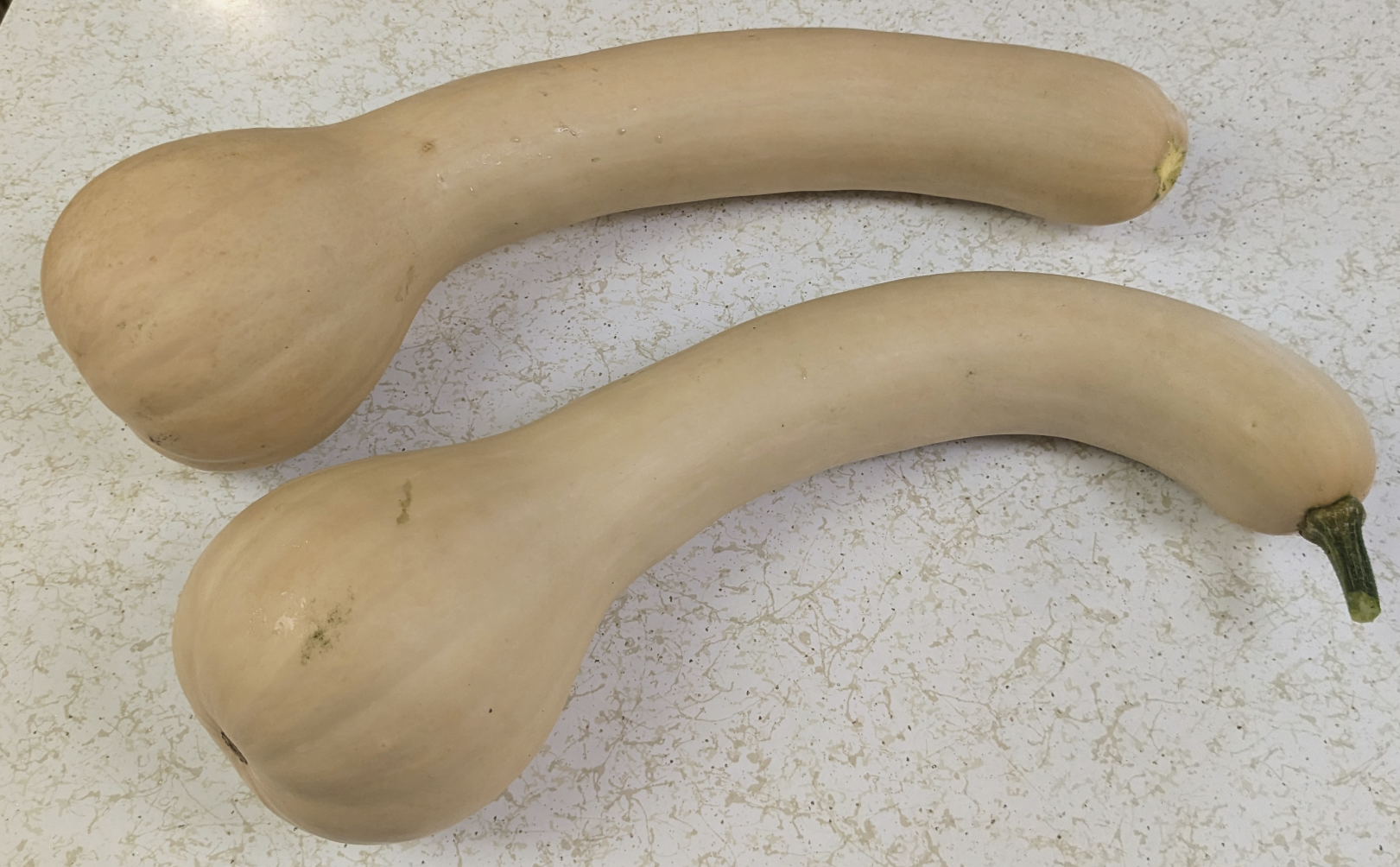
This was quite a surprise for someone expecting a Butternut. These monsters weighed several pounds and were more than 20″ long. It was at this point I reread Amy Goldman’s description of these moschata squashes. Turns out that the Canada Crookneck, looking a lot like what just popped up in my garden but a little smaller, were a favorite winter squash for the homestead, especially in new England. There are some larger crooknecks, too, the Pennsylvania Dutch crookneck squash which produces very big 10 to 20 lb. fruits. In fact, most of the moschata varieties have long curved necks. Plant breeders around the turn of the 20th century were looking for a variety that was easier to pack and ship than the awkward crooknecks. They exploited the tendency of the crooknecks to sometimes throw a straight-necked fruit, and with selection and time, developed the first Butternuts in the 1930’s. Apparently the first Butternuts were none too stable, often reverting to a crookneck, but the breeders were persistent, so that today Butternuts are quite true to form and don’t often throw a crookneck sport. But if you are a seed saver and give preference to characteristics you like, the odds change a little. Clearly most of the genes for the crookneck were there all the time and my bit of selection managed to release some characteristics of the old varieties.
This year I planted seeds from last seasons two crooknecks and ended up with quite a pile of the goofy looking beauties.

Some of the big ones are more than 9 lbs and more than 2 feet long – no little wimpy Butternuts here. A pair of them make excellent exercise dumbbells! I will be very curious about the flavor and texture of the squashes as we gradually eat them up over the next few months. I planted these squash scattered around the garden this year. The big fruit came where they had the best location and soil, from just a couple of plants. If the big ones maintain good flavor and texture, that is a lot of good squash!
I didn’t deliberately plant any “normal” butternuts this year, but a volunteer showed up in the garden that produced a small late squash for comparison’s sake.

The first few we’ve eaten had good texture and flavor, with the ripest fully cured ones nicely sweet. One of our favorite ways to prepare Butternuts is to peel them, slice “rounds,” and bake in the oven. With a little seasoning the slices are delicious and easy to eat – great for parties.

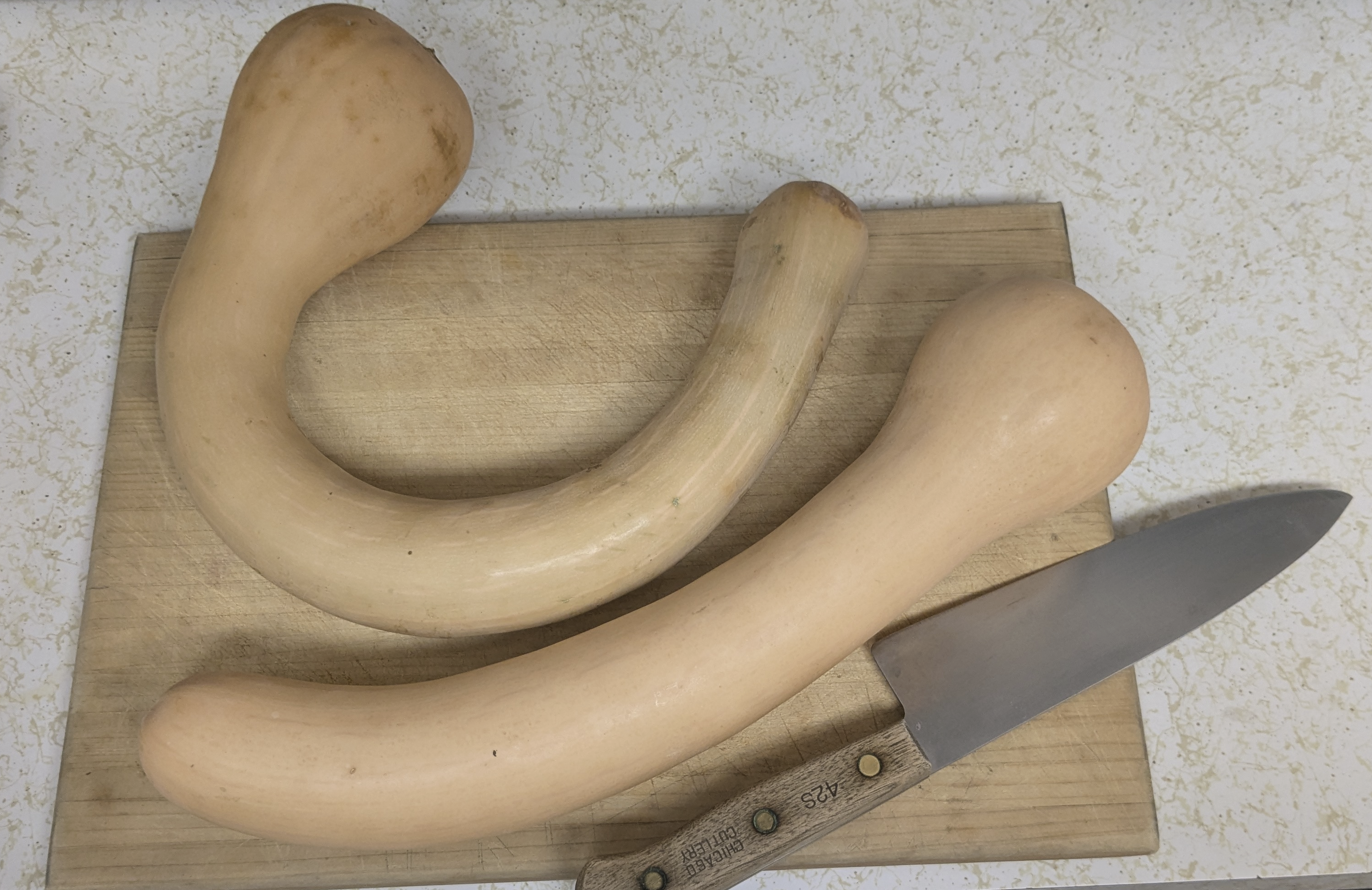

We are just starting another season of selection and another batch of seed for the future. It sure looks like a version of the Canada Crookneck has returned, but it is bigger. I think we’ll call it the SquashPractice Crookneck and see where it goes from here.
You can buy crookneck seed if you look for it, but it is not commonly in your garden store. If you would like a few seeds selected from that happy collection of squash above, please send me a note on the contact page, and I’ll send you some seeds as they become available. We can all start a resurgence of this underappreciated variant.
 Squash Practice